Receipt Printer IP Address Keeps Changing? Fix the Lease
Trace a changing receipt-printer IP through DHCP, the router, and saved POS targets, then stabilize the address without creating a conflict.
- Written by
- Clayton Wingfield
- Reviewed by
- Clayton Wingfield
- Originally published
- Aug 7, 2026
- Last reviewed
- Aug 7, 2026
Quick verdict
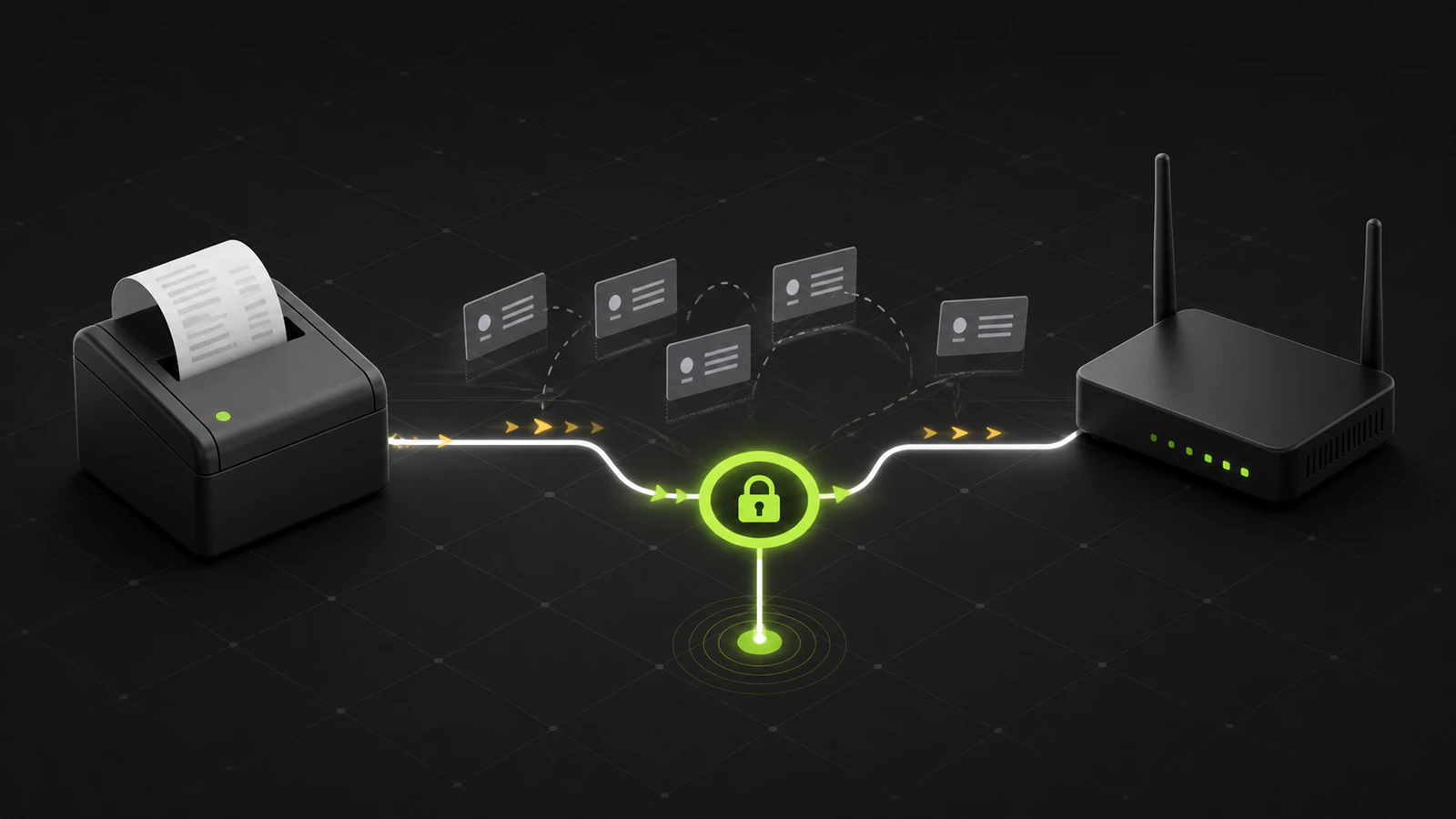
Compare the printer's current network report with the POS target, recover the route, then stabilize the address using the vendor-supported reservation or manual-address method.
- Best for
- Retail and hospitality operators whose Ethernet or Wi-Fi receipt printer disappears after a router restart, power event, or DHCP lease change.
- Avoid if
- The printer is USB or Bluetooth only, the network is vendor-managed, or pending payments and queued production tickets make restarts unsafe.
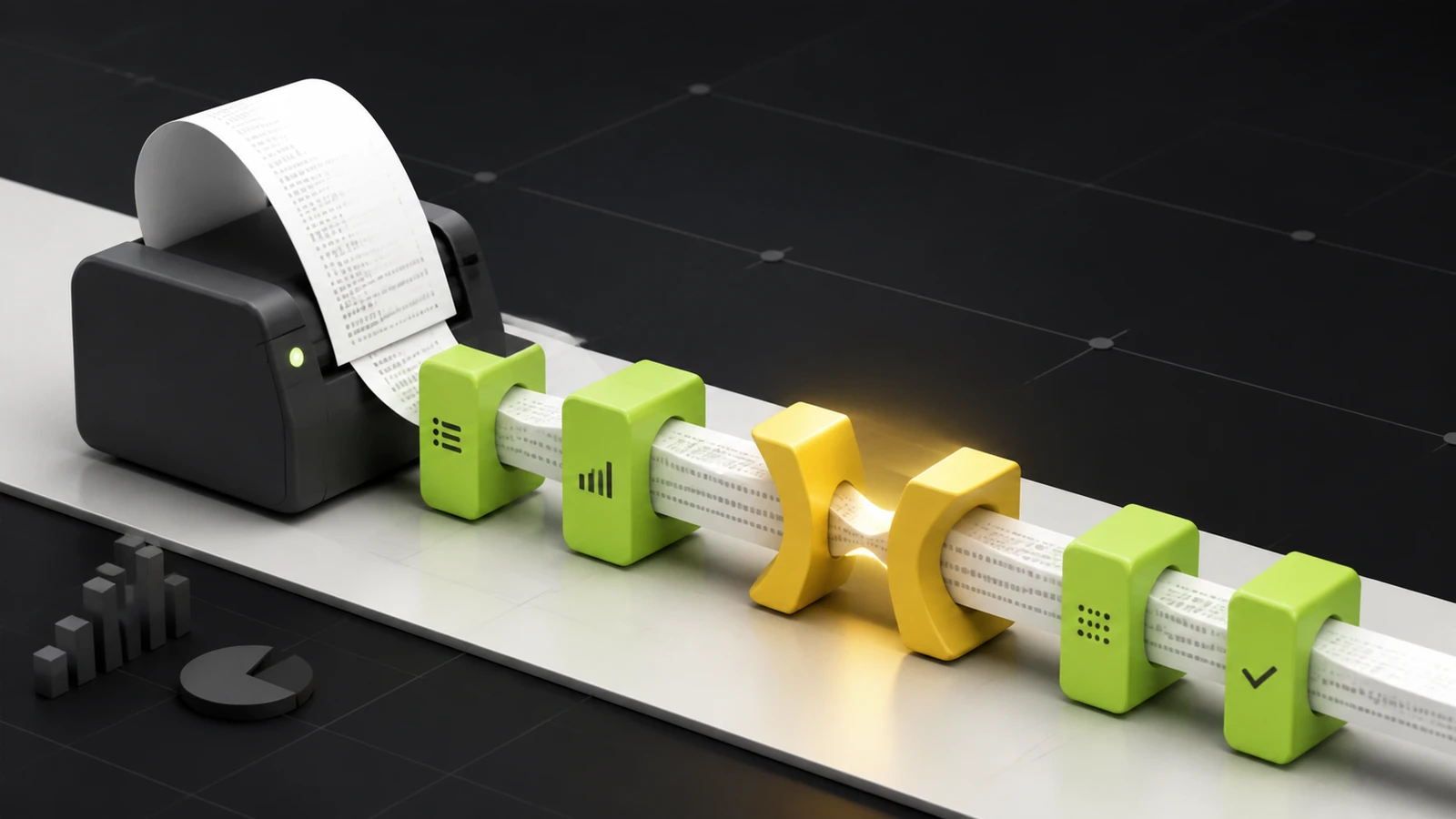
When a receipt printer’s IP address keeps changing, compare the address on the printer’s current network report with the address saved in the POS before resetting anything. If they differ, the printer may be healthy while the register is still sending jobs to an old address.
The durable fix is to give the printer a predictable address using the method supported by the POS, printer, and router. That may be a DHCP reservation, a manual address outside the router’s dynamic pool, or both. Record the working configuration and update every POS device that targets the printer.
Confirm that the IP address actually changed
Do not treat every “printer offline” message as an address problem. A loose Ethernet cable, failed switch port, isolated Wi-Fi network, or disabled printer route can produce the same symptom.
Capture four facts while the failure is present:
- Print the model’s network status or configuration report using the manufacturer’s documented procedure.
- Record the printer’s current IPv4 address, subnet mask, gateway, DHCP or manual status, and wired or wireless interface.
- Open the POS printer settings and record the address saved for that physical printer.
- Compare the two addresses exactly.
The Square static-IP guide documents how supported Epson and Star printers can produce network information sheets and how Square can reconnect to a known address. Model-specific controls differ, so use the printer manual rather than assuming that holding the Feed button works the same way on every device.
Read the result before changing settings
| What you find | Likely boundary | Next move | | --- | --- | --- | | Printer report shows a valid new address; POS stores the old address | Stale POS target after a lease or network change | Update the POS route, then stabilize the address | | Printer shows no address or an automatic fallback address | Printer has not received a usable network configuration | Check cable, Wi-Fi association, DHCP service, and subnet before editing the POS | | Printer and POS addresses match, but no device can reach the printer | Physical link, VLAN, isolation, firewall, or printer-network fault | Test the local network path | | One register prints and another does not | Device-local printer registration, permission, or profile | Compare the two registers before changing the printer | | Several devices lose several printers together | Router, switch, power, or wider network event | Diagnose upstream instead of editing every printer | | A different device responds at the printer’s saved address | Address conflict or reassignment | Stop and resolve ownership before sending more jobs |
DHCP can assign a client a different address after a lease, restart, or network change. Epson’s DHCP administration note warns that this can require a matching printer-port update and recommends binding an address to the interface’s MAC address or using a nonconflicting manual address.
If the whole POS is dropping rather than one printer, use the broader POS network-path diagnostic. If the address matches and the failure is limited to Square routing, continue with the Square receipt-printer diagnostic.
Recover printing without creating a conflict
Start with the least disruptive route.
Verify the printer is on the intended local network
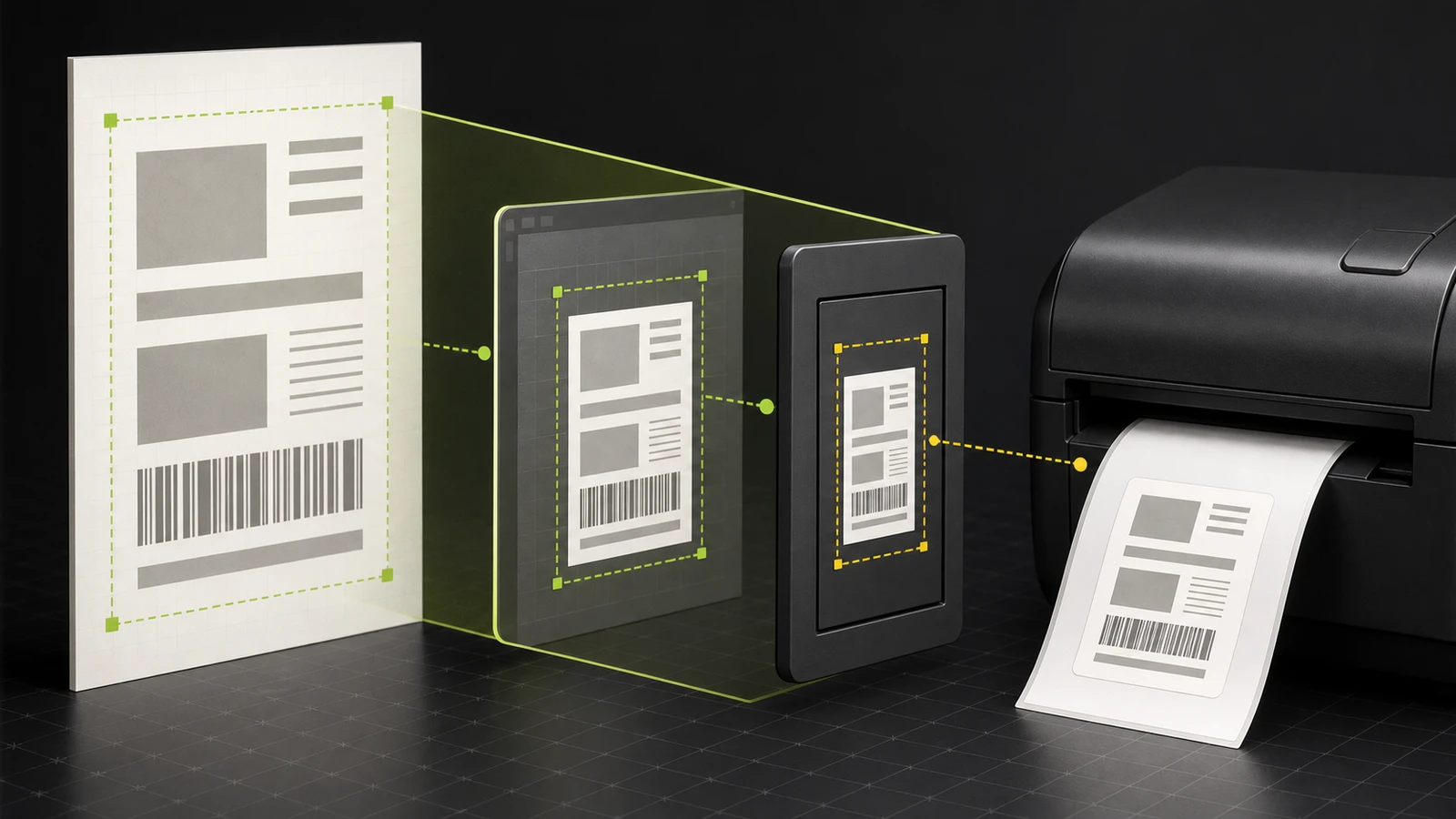
Confirm that the printer and POS are connected to the intended business LAN, not a guest network, installer access point, or old router. Compare the network portion of their addresses and the documented subnet mask. Never copy an address from another device.
Epson’s current TM-m30III technical reference directs administrators to place the setup computer on the same network segment as the printer and verify the configuration with a status sheet. Treat its controls as model-specific.
Update the saved POS target when the new address is valid
If the current printer address is valid, unique, and reachable from the POS network, update the printer connection in the POS using that address. Then run the platform’s supported test print.
This restores the route but does not prevent another change. Update every register, print server, or integration that explicitly stores the old address; a mixed deployment can appear fixed at one counter while kitchen printing still targets the stale value.
Clear only confirmed stale jobs
After the route is corrected, clear jobs only when you can identify them as stale. A backlog can print suddenly when the destination becomes reachable again. In a restaurant or fulfillment workflow, that can create duplicate tickets or trigger work twice.
If old jobs begin printing more than once, document the sending devices, routes, and timestamps before deleting profiles or registrations.
Make the address predictable
There are two common controls, and their names are often blurred together.
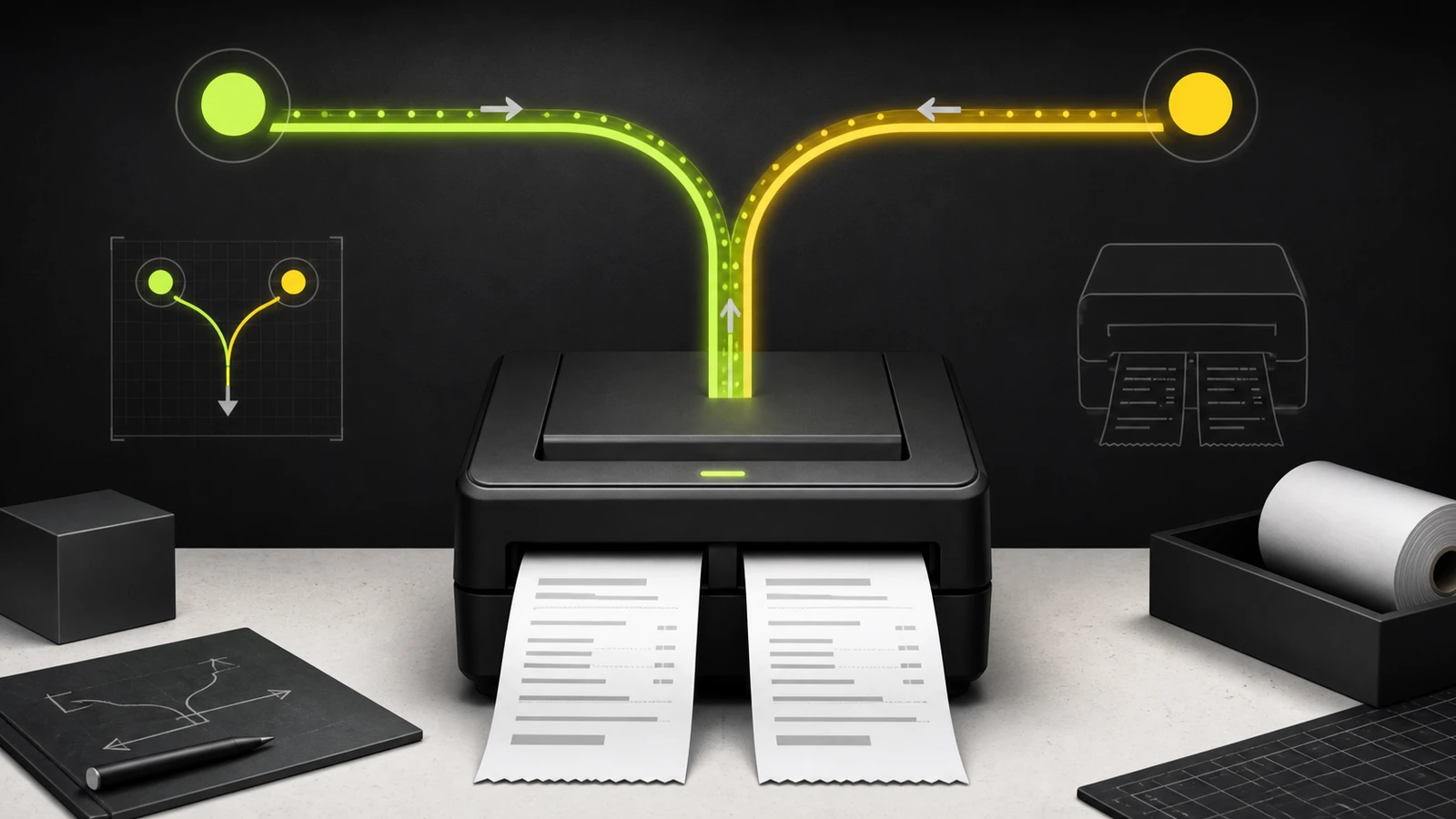
- DHCP reservation: the router’s DHCP service assigns the same address to the printer’s network-interface identifier. Address ownership stays visible in the router, and the printer can remain configured for automatic addressing.
- Manual or static address: the address is stored on the printer. It must fit the intended subnet and must not collide with the router’s dynamic pool or another reservation.
Use the method required by the POS and supported by the printer. Square’s current workflow tells operators to configure a static address on each compatible printer and reserve that same address in the router; it also recommends involving the network administrator. Other managed POS systems may control printer addressing or require vendor support.
For an unmanaged small network, a router reservation is often simpler to audit because the assignment is centralized. Do not assume it is sufficient when the POS vendor requires a manual printer address. Do not place a manual address inside the DHCP pool unless the router excludes or reserves it; two devices claiming one address can create intermittent failures.
After the change:
- restart only the components required by the vendor procedure;
- print a fresh network report;
- confirm the intended address and addressing mode;
- verify the address is unique in the router or management system;
- update the POS target if needed;
- test each register and each important print route;
- document the printer model, interface, MAC address, reserved or manual address, router, switch port, POS profile, and change date.
Do not publish that record or store administrator credentials in it.
Handle router replacements and subnet changes differently
A reservation survives only inside the router configuration that owns it. Replacing a router, restoring an old configuration, or changing the LAN subnet can strand a manually addressed printer on the former network.
If the printer keeps its old manual address but the new router uses a different subnet, the POS may be unable to reach the printer’s web interface. Follow the printer manufacturer’s documented recovery path or ask the network administrator to create a temporary authorized setup path. Do not factory-reset a live printer merely to make it discoverable; a reset can erase interface, print, security, and cash-drawer settings.
Toast’s current offline-printer troubleshooting uses a test slip to check address and DHCP state. Lightspeed’s Ethernet printer troubleshooting separates a missing address from an assigned printer that cannot communicate. Recovery steps remain platform-specific.
Prevent the failure from returning
Keep a network-printer register with the physical name, model, interface, network identifier, address method, POS routes, and responsible administrator. Update it after router, VLAN, or printer changes. Test customer receipts, kitchen tickets, online orders, and cash-drawer behavior where applicable; one hardware test does not prove every application route.
When to involve the vendor or network administrator
Escalate when the printer repeatedly loses its address, multiple devices claim the same address, the business uses managed networking, the printer sits across a VLAN or VPN, required credentials are unavailable, or the POS vendor controls the network. Also stop if pending offline payments or queued kitchen tickets could be affected by a restart.
Provide the printer model, interface, current network report, POS-stored target, time of the failure, recent router or power changes, and a list of affected registers. That evidence is more useful than a factory reset performed without a rollback plan.
Limitations of this guide
This is researched troubleshooting guidance. Devicefield did not test a receipt printer, POS platform, router, DHCP server, VLAN, print server, or queued-job recovery for this article. Addressing controls, default modes, credentials, configuration-report procedures, discovery behavior, ports, and reset risks vary by platform, printer model, interface, firmware, and managed-network policy.
Frequently asked questions
Why does my receipt printer get a new IP address after a power outage?
The printer may request an address through DHCP when it reconnects. Depending on the lease and router state, it can receive a different address while the POS still stores the old one. Compare the current printer report with the POS target before changing anything.
Is a DHCP reservation the same as a static IP address?
They can produce the same stable result, but ownership differs. A reservation is configured on the DHCP server or router; a manual address is configured on the printer. Follow the POS vendor’s required method and prevent the chosen address from being assigned to another device.
Should I set the printer to its old IP address?
Only after confirming that the old address belongs to the intended subnet and is not in use or available to another DHCP client. Reusing an address without checking can create an intermittent conflict.
Will a factory reset fix a changing printer IP address?
It may return the printer to automatic addressing without solving address stability, and it can erase other working settings. Use the model-specific network procedure or administrator support before considering a full reset.
Compatibility notes
Systems, accessories, and constraints
Applies to network-connected receipt and order printers. Exact address modes, status-report procedures, discovery behavior, router controls, POS registration steps, network ports, credentials, and reset methods vary by platform, printer model, interface, firmware, and managed-network policy.
Testing methodology
How this article was evaluated
Reviewed all 36 local packages and 36 database inventory records; searched sixteen current query variants across four candidate intents; reviewed the selected primary query and seven close variants; synthesized current Square, Epson, Toast, and Lightspeed documentation into an address-boundary diagnostic.
Known limitations
What this guide could not verify
Research-only. No receipt printer, POS platform, router, DHCP server, VLAN, print server, or queued-job recovery was tested. Current platform, printer, and network-administrator guidance controls.
Sources
Documentation and references
- Create a static IP address for printer connections - Documents Square's current static-address workflow for compatible network printers, POS reconnection, router reservation, and administrator boundary.
- Instructions on Using DHCP - Explains how DHCP address changes affect printer ports and recommends MAC-bound assignments or nonconflicting manual addressing.
- TM-m30III Technical Reference Guide - Documents automatic DHCP behavior, status-sheet verification, same-segment setup, and Web Config access for this printer family.
- Get Help With Printers Going Offline - Uses the printer test slip to inspect IP and DHCP state and distinguishes one-printer problems from broader network failures.
- Ethernet Printer Troubleshooting - Documents current address-report checks and separates missing network assignment from application communication failures.
- Set up network requirements for Square hardware - Confirms that supported network-printer communication uses local network paths and platform-specific local ports.
Devicefield checklist
Make the next hardware decision with fewer surprises.
Get practical buying notes, compatibility checks, and new troubleshooting guides.
Frequently asked questions
Why does my receipt printer get a new IP address after a power outage?
The printer may request an address through DHCP when it reconnects. Depending on the lease and router state, it can receive a different address while the POS still stores the old one. Compare the current printer report with the POS target before changing anything.
Is a DHCP reservation the same as a static IP address?
They can produce the same stable result, but ownership differs. A reservation is configured on the DHCP server or router; a manual address is configured on the printer. Follow the POS vendor’s required method and prevent the chosen address from being assigned to another device.
Should I set the printer to its old IP address?
Only after confirming that the old address belongs to the intended subnet and is not in use or available to another DHCP client. Reusing an address without checking can create an intermittent conflict.
Will a factory reset fix a changing printer IP address?
It may return the printer to automatic addressing without solving address stability, and it can erase other working settings. Use the model-specific network procedure or administrator support before considering a full reset.